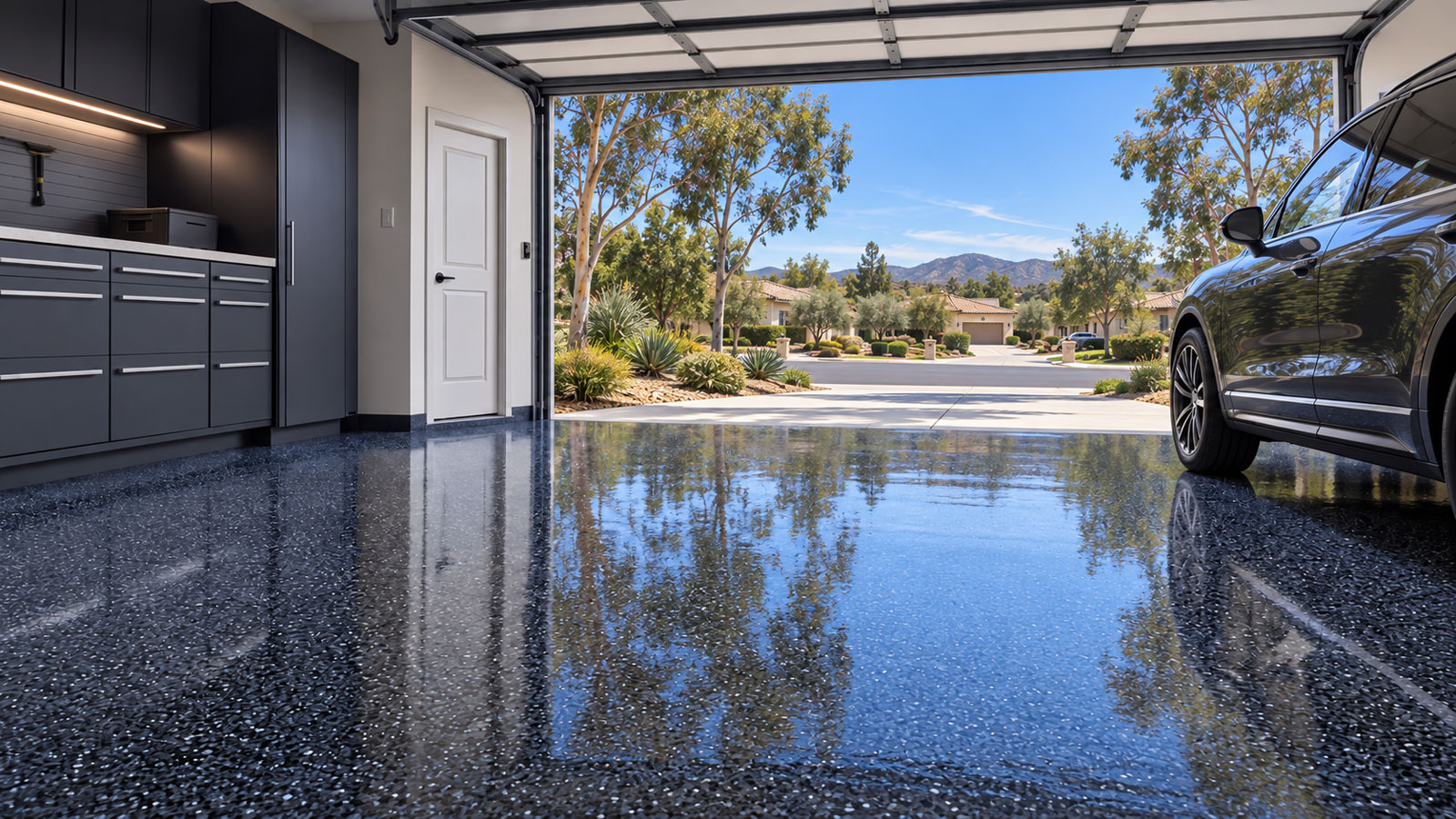
Garage Floor Coating in San Diego, CA
Floor Coating Services in San Diego, CA
San Diego is the broad metro service area for Poway Epoxy, and garage conditions can vary considerably across a city this large. Coastal neighborhoods, inland communities, older homes, newer construction, shaded garages, and sun-exposed entries can present different preparation questions even within the same metro.
That is why the starting point should be the concrete itself. Previous coatings, oil or tire contamination, cracks, moisture signs, drainage at the garage threshold, and direct sunlight all matter more to project planning than a one-size-fits-all assumption about "San Diego weather."
The city's generally mild climate does not eliminate moisture or traction questions. Winter rain and wet tires can still bring water onto a garage floor, while open-door sunlight can make UV stability worth considering in some garages.
Local Market Insight
San Diego's coastal-to-inland range makes slab-specific evaluation more useful than a single metro-wide coating assumption.
Coastal-to-Inland Garage Conditions
A garage closer to the coast may have a different moisture and exposure pattern from a garage farther inland, but location alone does not determine the coating system. The installer still needs to look at the slab surface, prior coatings or sealers, drainage, ventilation, and how the garage is actually used.
Where direct sunlight reaches the garage entry, a UV-stable topcoat can be a useful planning consideration. Where wet tires routinely enter during winter rain, texture and traction can also matter. Those choices should follow the actual garage rather than a blanket assumption applied across the city.
What Affects the Cost of Garage Floor Coating in San Diego?
For San Diego homeowners, a garage-floor project should be scoped around the specific slab and entry conditions rather than a single metro-wide assumption. A shaded or coastal-facing garage can call for a different conversation than an inland garage that receives direct sun, while slab history, water at the threshold, and the way the space is used can all change the preparation and finish plan.
- Garage footprint and layout: Square footage remains a core project variable, but parking bays, steps, storage zones, transitions, and irregular edges can affect the amount of surface that must be prepared and coated.
- Coastal-to-inland exposure: San Diego covers a broad coastal-to-inland area, so exposure should be assessed at the garage itself. Shade, airflow, and site-specific moisture observations may differ from one property to another rather than following a citywide rule.
- Slab history and existing materials: Older paint or coatings, oil contamination, cracks, repairs, and prior slab treatment can increase the work needed to create a sound surface. Mechanical preparation and removal needs should be determined from the concrete, not assumed from its location or appearance.
- Garage-entry water and wet-tire exposure: Winter rain, water moving across an entry, and routine wet-tire traffic may affect preparation and the preferred traction level. These conditions should be evaluated at the threshold; a coating is not a substitute for correcting an unrelated drainage problem.
- Sunlight and finish selection: Where direct sunlight reaches an open garage entry, UV-stable topcoat selection can be relevant. Decorative finish, sheen, and texture should also reflect the homeowner's cleaning, traction, parking, storage, and hobby-use priorities.
Call for a clear, project-specific estimate — or request one online.
Preparation Matters More Than the Product Name
Homeowners often begin by comparing epoxy with polyaspartic coatings, but surface preparation usually has more influence on adhesion than the label on the coating. Grinding, crack and joint evaluation, removal of weak prior coatings, and cleanup of oil or other contamination should be matched to the slab in front of the installer.
A well-planned San Diego garage project therefore starts with condition and use: daily parking, storage, hobby work, sunlight at the door, wet-weather entry, and desired return-to-service. Product selection comes after those questions are understood.
San Diego Garage-Floor Conditions Vary by Location
San Diego's coastal-to-inland range means a garage should be evaluated as its own environment. A coastal or shaded location can have different exposure questions from an inland, sun-facing entry, but neither label alone establishes the condition of the slab. The concrete surface, ventilation, prior treatments, and observed moisture conditions provide the more useful basis for planning.
Seasonal rain can make the driveway-to-garage transition important. Where water or wet tires regularly reach the floor, homeowners may want to discuss traction, cleanup, and the preparation required at the entry. That review should identify the path water takes before installation; a floor coating can finish suitable concrete, but it does not remedy drainage defects.
The condition and history of the concrete remain central in every part of the city. Old paint, failing coatings, oil residue, cracks, joints, and repairs may require different grinding, removal, or repair work than clean-looking concrete. Choosing between epoxy and polyaspartic comes after that preparation assessment and after considering sunlight, desired return-to-service, and how the garage will be used.
Local Project Considerations in San Diego
Choose a coating system for the actual garage environment, not simply the product name.
Local Planning FAQs
Does San Diego's dry, mild climate mean moisture evaluation is unnecessary?
No. Regional weather does not establish the moisture condition of an individual garage slab. A project review should consider visible moisture signs, prior coatings, slab history, drainage at the entry, and localized water exposure before selecting and installing a coating system.
Is polyaspartic automatically better near the coast?
No. Proximity to the coast does not by itself select the right coating chemistry. The appropriate system depends on the actual concrete condition, preparation requirements, exposure at the garage, desired finish, and the homeowner's use and return-to-service needs. A coastal location is a reason to inspect conditions, not to bypass surface evaluation.
Does direct sunlight at an open garage door affect coating choice?
It can. When sunlight reaches the coated area, UV stability may be relevant to topcoat selection and long-term appearance. The amount and pattern of sun should be considered alongside surface preparation, traffic, traction preferences, and the rest of the coating build rather than treated as the only decision factor.
What matters most when coating an older San Diego garage floor?
The key issue is the condition of the concrete beneath anything already on it. Older floors may have paint, previous coatings, oil contamination, cracks, joints, or repairs that need evaluation before a new system is applied. Proper cleaning, removal where needed, and mechanical preparation are more important than simply applying a new product over an uncertain surface.
Nearby Areas / Local Context
San Diego Community Planning Context
Phone Quote Line
Speak with a local floor coating specialist about your project and get a realistic estimate range.
(858) 400-4470Typical Project Cost
$3,000–$5,500
Typical two-car garage planning range. Final pricing depends on floor size, concrete condition, prep work, coating type, and finish options.
Helpful Guides